
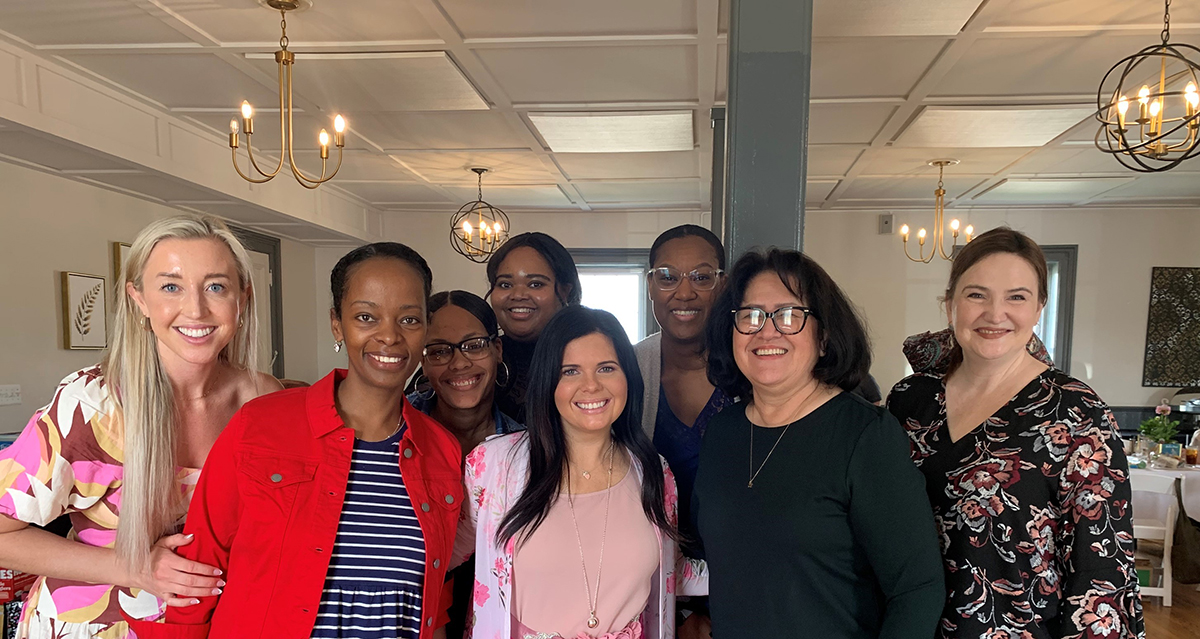
Dr. Jennifer Johnson, a C.S. Mott Endowed Professor of Public Health, is conducting several research projects. Her research team consists of the following members:
Project Manager
Raven Miller, MS
Raven holds a master’s degree in clinical research administration and has worked in clinical research since 2013. She joined Dr. Jennifer Johnson's research team in 2018 and serves as a research operations leader supporting a diverse portfolio of multidisciplinary research projects. Raven provides expertise in the strategic planning and operationalization of research protocols, partnering with investigators to translate study concepts into efficient, compliant, and sustainable research operations. Her responsibilities include research operations and project management, regulatory oversight, process development, personnel recruitment and onboarding, staff training, and mentoring research support staff. She collaborates closely with investigators and research teams to strengthen operational infrastructure, improve workflow efficiency, and support the successful implementation and management of complex research studies. Raven is passionate about advancing research that improves access to care, promotes prevention, and addresses health inequities. In 2026, she received the Charles Stewart Mott Department of Public Health Exceptional Support Staff Award in recognition of her outstanding contributions to research operations, collaboration, and excellence in supporting multidisciplinary research teams.
Academic Specialists
Kenyetta Dotson, PhD, DMIN, MSW
Kenyetta Dotson is the Director of Community-Based Implementation and Engagement at Michigan State University, where she leads NIH-funded initiatives to advance maternal health equity through community partnerships and evidence-based engagement strategies. A lifelong Flint resident and servant leader with more than 30 years of community development experience, she is dedicated to advancing health equity, reducing violence, and creating lasting systemic change for children, families, and communities.
Jonne McCoy White, PhD
McCoy White is an academic research specialist who coordinates community-partnered, NIH-funded research focused on advancing health equity in maternal health outcomes, and promoting vaccine confidence among pregnant patients. She has extensive experience in community engagement, medical education, and developing evidence-based interventions that strengthen partnerships between healthcare systems and the communities they serve.
Communications and Administration
Morgan Flees Morgan, MS
Morgan graduated from Eastern Michigan University in 2011 with a Bachelor of Science in Communications and Marketing. She joined Michigan State University in 2017 and currently serves as Dr. Johnson's Administrative Assistant on a part-time basis. Prior to her current role, she served as Communications Manager for the National Center for Health and Justice Integration for Suicide Prevention (NCHATS). Before joining MSU, Morgan worked for six years as a residency coordinator at the University of Michigan in Ann Arbor. Throughout her career, she has been dedicated to supporting faculty, educators, and leadership by keeping teams organized, priorities on track, and daily operations running efficiently. She enjoys helping people and organizations succeed through thoughtful coordination, strong communication, and attention to detail.
Patrick Hayes, MA
Patrick is a communications manager for Michigan State University’s Charles Stewart Mott Department of Public Health. He has worked in higher education communications for more than a decade and has an MA in journalism from Michigan State University and a BA in General Studies/Political Science from Oakland University.
Victoria Nelson, PhD
Victoria completed her PhD in Criminal Justice from SUNY: University at Albany in 2023. Before joining Dr. Johnson's team at MSU in May of 2025, she worked as a data analyst and project coordinator/manager at several research centers within universities, and in federal contracting companies. Her research spans topics including racial and ethnic disparities in juvenile justice, effective treatment and diversion for individuals with behavioral health issues in/from jails, involuntary psychiatric treatment, and behavioral healthcare public funding sources. She has contributed to published journal articles in Psychiatric Services, Criminal Justice and Behavior, and the International Journal of Offender Therapy and Comparative criminology. She has also contributed to dozens of federal, state, and county level research reports; hosted webinars for front-line behavioral health service providers about ways to track and use data; and managed full-cycle research projects from research question through dissemination. As a member of Dr. Johnson's team, she is a data analyst for the MIRACLE R01 grant.
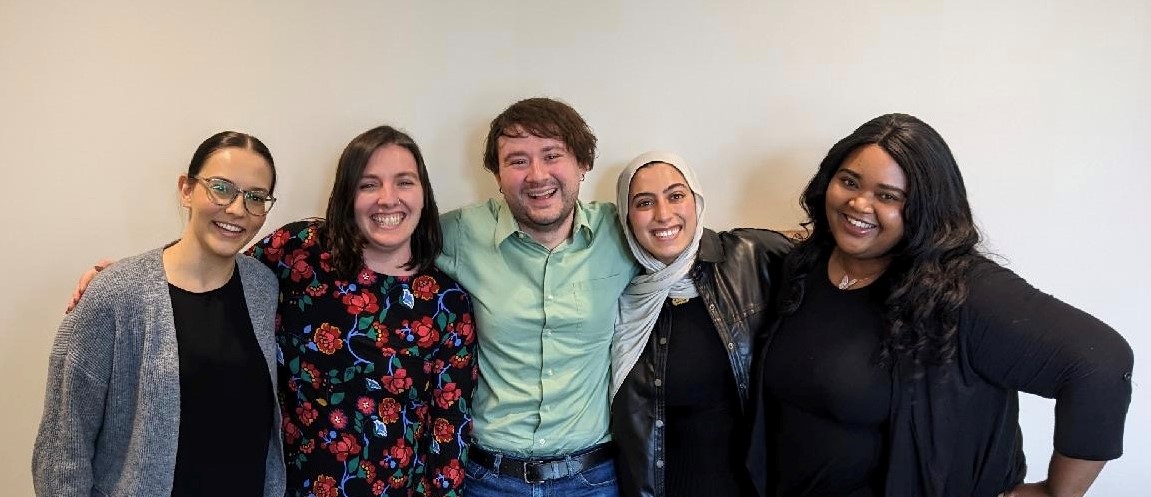
Project Coordinators
Simran Dhaliwal, MS
Simran graduated from George Mason University in 2023 with an MS in Educational Psychology, with a focus on assessment, evaluation, and testing. She earned her bachelor’s degree in psychology and Sociology from Brunel University, London. Prior to joining the Johnson team, she interned at PCORI within the Intellectual and Developmental Disabilities (IDD) department, where she gained extensive experience in qualitative analysis and coding. She is a mixed-methods researcher with an expertise in contributing to research projects in both academic and nonprofit settings. She also served as a Project Lead at the College of Public Health at George Mason University, where she supported a longitudinal study on college completion and the physical and mental health of young adults. Simran is currently serving as the Project Coordinator for the MIRACLE Study (Project 3) and is excited to continue supporting the team and helping move the project forward. She hopes to earn a PhD in epidemiology in future to contribute to the generation of scientific evidence that informs public health policy, programs, and practice.
Christine Huff, MBA
Christine graduated from Baker College, Center for Graduate Studies with an MBA in Leadership in 2012. Her Bachelor’s degree is in Health Services Administration. Before coming to MSU, she worked for Genesys PHO as a Business Analyst and Baker College as an Academic Advisor. She was also an adjunct faculty member at Baker College, teaching Healthcare and Business courses. Christine focuses on Servant Leadership and has volunteered at the North End Soup Kitchen, and the Burton V.F.W. volunteering with “My Heart Supports the Troops,” where boxes are sent to deployed military men and women who are from Michigan. She is also on the board for the Freedom for Veterans Race, which helps local veterans and programs in Genesee County. Christine began working with Dr. Johnson’s team as a Research Assistant for the HEAL study. She felt the calling to continue her work as a Servant Leader in helping others through research and healing.
Susan Lamphere, MA
Sue obtained her B.A. in Psychology from the University of Notre Dame and went on to earn an M.A. in Counseling Psychology from Michigan State University. She began working with Dr. Johnson’s team as a Research Assistant for the SPIRIT Study. Sue was drawn to the work because of the translational nature of the mental health research and the intention to apply new, more effective interventions.
Research Assistants
Prudence Croom-Larry, MSW, MHA/Ed, BS
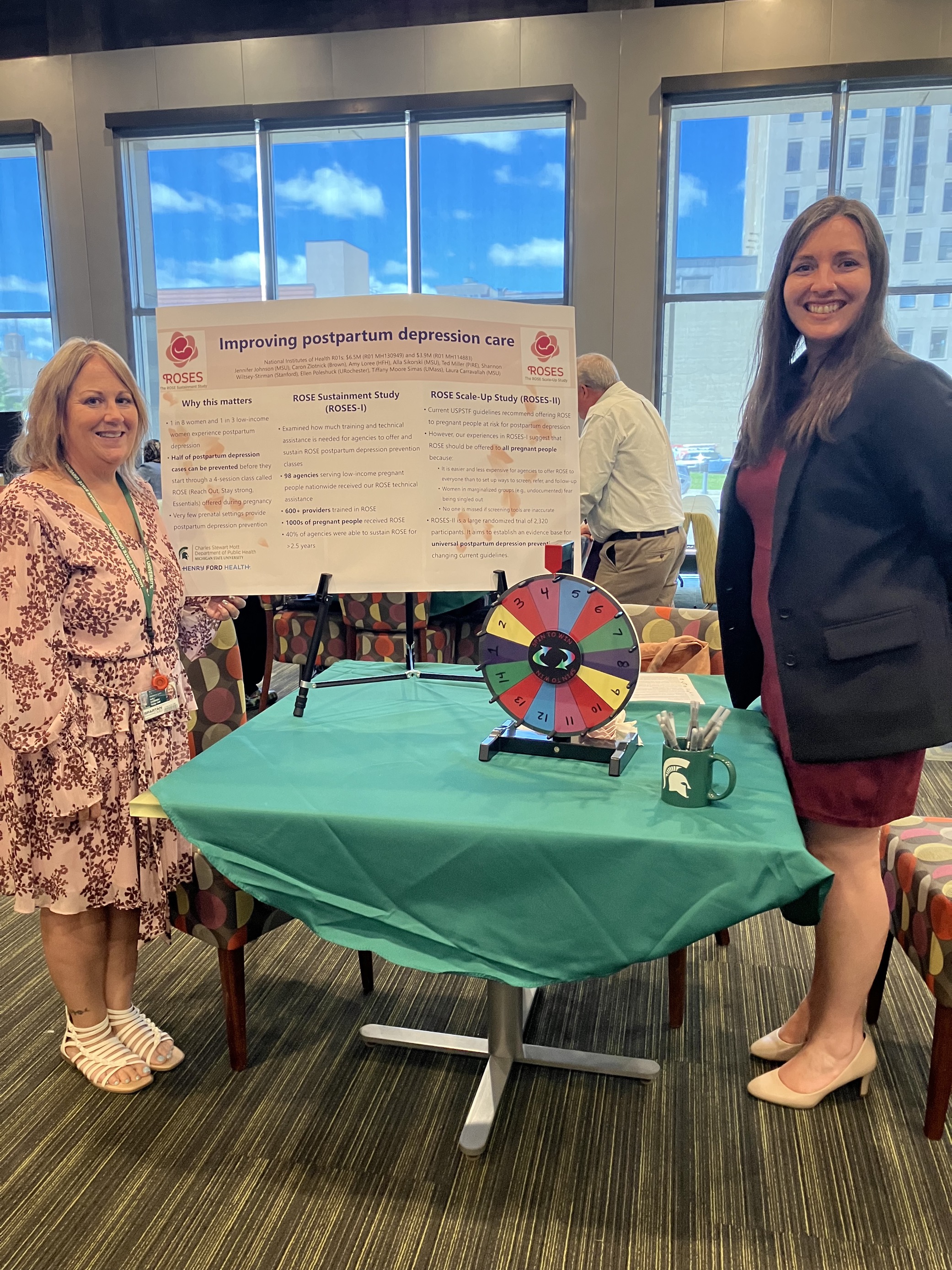
Prudence earned a Master of Social Work from Arizona State University in 2019, a Master of Health Administration/Education from the University of Phoenix in 2018, and a Bachelor of Science in Human Service Management in 2009. Drawing on her expertise in evidence-based practice, data collection, literature reviews, and research analysis, Prudence is committed to supporting research that improves health outcomes and strengthens communities. She previously served as a Research Assistant at Michigan State University (MSU) with the Mothers Advocates in the Community (MOSAIC) program for two years, where she contributed to research focused on preventing intimate partner violence (IPV) and supporting women experiencing post-traumatic stress disorder (PTSD). Prudence currently serves as a Research Assistant with the Michigan State University ROSE-II program, where she contributes to research aimed at preventing and addressing postpartum depression. Through collaboration, compassion, and evidence-based practice, she is dedicated to advancing maternal mental health and empowering women and families to build strong, healthy foundations.
Alanna Foulon, BA
Alanna graduated from the University of Windsor in Canada with a B.A in Political Science in 2017 and a B.A. in Psychology in 2022. She has research experience in substance use and related mental health disorders. Through her education and clinical experiences, she developed a passion for helping vulnerable populations. She hopes to attend graduate school in clinical psychology or clinical social work so that she can work as a clinician, researcher, and advocate at the community level. Alanna is thrilled to be apart of the ROSES-II team!
Quincy Kittle, BA
Quincy (she/her) graduated from Michigan State University in 2017 with a BA in Comparative Cultures and Politics. She obtained Minors in Spanish, Latin American and Caribbean Studies, and Science, Technology, the Environment, and Public Policy. She is a Research Assistant with the ROSES Scale-up Study. Prior to ROSES, she has worked in the nonprofit sector advocating for people with disabilities and as a Peace Corps Volunteer in the Dominican Republic. She is passionate about reproductive access and justice and serves as a birth and pregnancy-loss Doula. She hopes to dedicate her career to advancing community health for children and pregnant people.
Data Analysts
Hong Su An
Post-Doctoral Scholar
Professional Counselors and Social Workers
- Katie Achtyes, MSW, LMSW
- Dan Burns, MS, LLP
- Meghann Deering, MSW, LMSW
- Kelsey Dempsey-Smith, MSW, LMSW
- Janet Evans, MSW, LMSW
- Elizabeth Goudie, MSW, LMSW
- Alicia Johnson, M.S., LMFT
- Colleen Kalanquin, MSW, LMSW
- Rowyda Kazan, MA, LLP
- Alexa Lepsetz, MSW, LMSW
- Teresa Visoso-Rangel, MA, LPC
- Erika Vittaglio, MSW, LMSW
- Rebecca Weinberg, MSW, LMSW
- Mizuka Yasuoka, MA, LPC
Faculty Affiliates
Maji Hailemariam Debena, PhD
Maji Hailemariam is a Mental Health Epidemiologist whose research focuses on improving access to mental health care in low-resource settings across Africa and the United States. Originally from Ethiopia, she earned her PhD in Mental Health Epidemiology from Addis Ababa University, where her early research examined the integration of mental health services into primary care in rural Ethiopia. Her current work centers on implementation science and the development of peer provider-delivered behavioral health interventions designed to improve access to care, reduce mental health symptoms, and enhance functioning among populations that face barriers to receiving mental health services, including perinatal women, rural residents, and individuals with criminal legal systems involvement. Through her research, Dr. Hailemariam is committed to developing practical, evidence-based approaches that expand access to behavioral health care and improve health outcomes in high-need communities.
JohnBosco Chika Chukwuorji, PhD
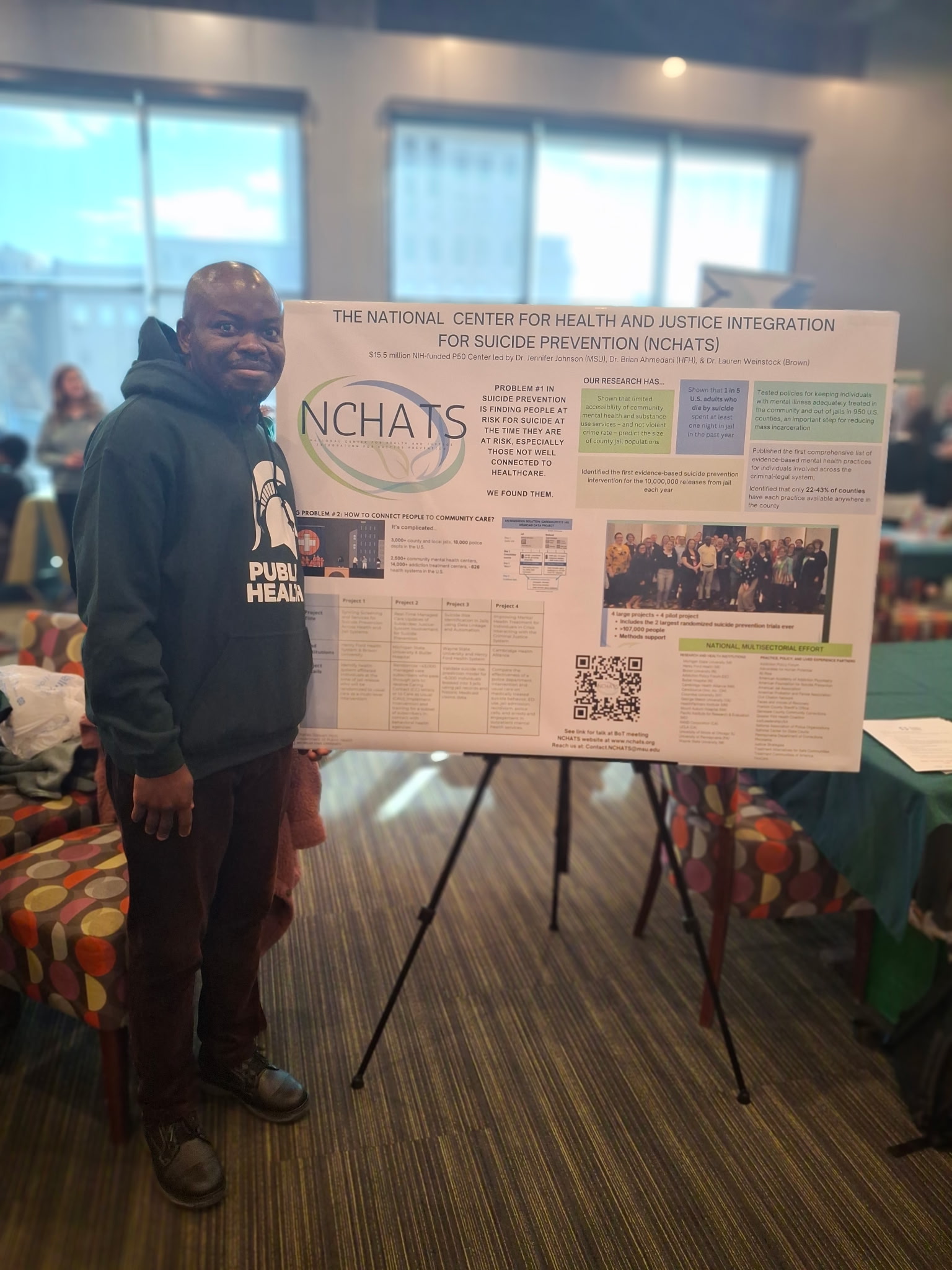
JohnBosco Chika Chukwuorji is an Assistant Professor at Michigan State University, where he supports the National Center for Health and Criminal-Legal Systems Integration for Suicide Prevention (NCHATS). He completed his predoctoral research as a Fulbright Scholar at Cleveland State University, Cleveland, Ohio, USA (2019–2020), and earned a PhD in Clinical Psychology from the University of Nigeria, Nsukka, in 2021. He serves in editorial roles for several reputable academic journals and received the 2025 Underrepresented Scholars Award from the International Society for Traumatic Stress Studies (ISTSS). He also serves on the ISTSS Board of Directors. His research focuses on developing and implementing innovative approaches to improving access to high-quality mental healthcare for people living with complex health conditions, forcibly displaced populations, justice-involved individuals, and other underserved and vulnerable groups.
Lab Alumni
- Stephanie Anthony
- Ashley Batsios
- Garrett Brown, MA
Industrial-Organizationl Psychology doctoral student at Auburn University - Kerrin Blanchard
- Morgan Cinader Galvan, MS
Financial Advisor- Verde Capital Management - Juan Contreras, AM
Psychotherapist at Roamer’s Therapy
Research Assistant at the University of Chicago - Haneen Hammad, MS
Clinical Psychology doctoral student at Indiana University-Bloomington - Takeya Harris
- Sara Hughes, MSW
Lead Social Worker at Centennial Peaks Hospital in Colorado - Kent Key, PhD, MPH
Racial and Ethnic Health Disparities Researcher and a faculty member at the Michigan State University College of Human Medicine in the Charles Stewart Mott Department of Public Health - Aisling Nolan, MS
Lead Data Analyst- MPHI - Brianca Nuby, BS
Registration - Alexandra Pawlaczyk, BA
Clinical Psychology Master of Arts student at Warsaw School of Social Psychology/ Clinical Psychology - Melissa Rainey
- Fallon Richie, MA
Clinical Health Psychology doctoral student at the University of North Carolina-Charlotte - Jamil B. Scott, PhD, MPH
Senior Scientific Program Analyst
National Institutes of Health
National Human Genome Research Institute
Office of the Director - Brandon Taylor, MSW
Clinical Social Worker - Tiffany Vedo

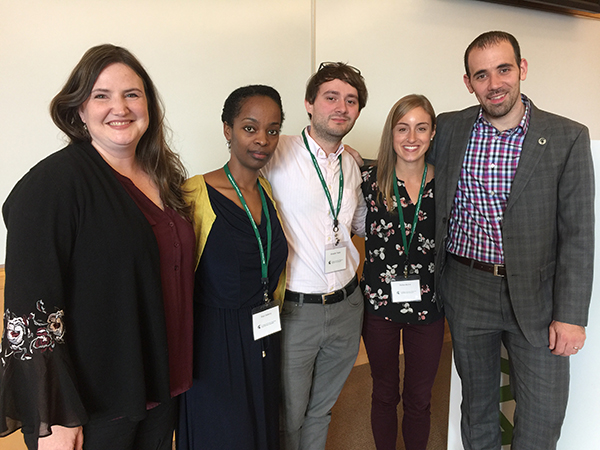
Pictured, left to right, Jennifer Johnson, Maji Hailemariam Debena, Brandon Taylor, Fallon Richie, and Rick Sadler
Our team is committed to respect for people of all races, colors, genders, religions, national origins, sexual orientations, history of criminal involvement, marital status, disability, height, weight, veteran status and age. We support Michigan State University’s goal of increasing diversity, ensuring equity, promoting inclusion, and enhancing outreach and engagement. Our work seeks to address structural racism and sexism, empower the unempowered, and elevate community and patient contributions to solutions.